



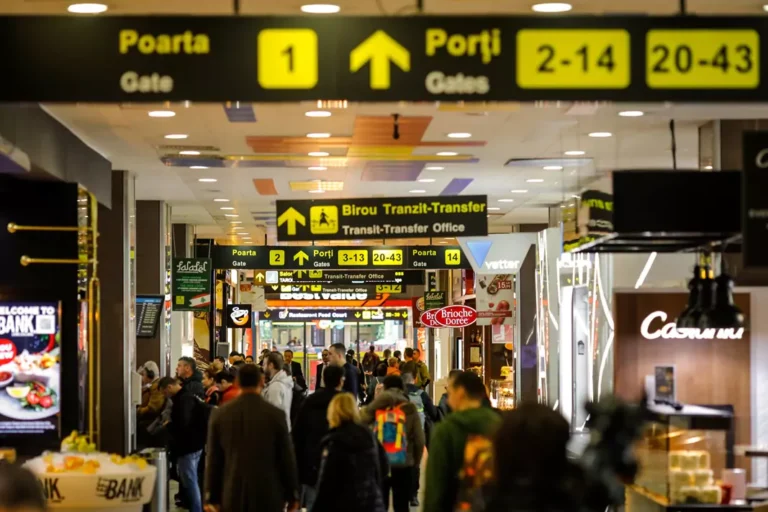
Bucharest’s air traffic reached an all-time high in 2025, with nearly 18 million passengers travelling through the capital’s two airports. Beyond traffic growth, 2025 was a landmark year for infrastructure development.
According to official data, 17,700,242 passengers were registered at Henri Coandă International Airport (Otopeni) and Bucharest Băneasa Aurel Vlaicu International Airport, marking an increase of 10.26% compared to 2024.
Henri Coandă International Airport continued to dominate traffic, surpassing a major milestone for the first time. In 2025, 17.006 million passengers transited through Otopeni, up 6.64% year-on-year, consolidating its position as Romania’s main aviation hub.
Băneasa’s spectacular comeback
While Otopeni delivered solid growth, the real surprise of 2025 came from Bucharest Băneasa Airport. Reopened for regular passenger flights after a 13-year hiatus, the airport handled 694,718 passengers, representing a staggering 548.74% increase compared to 2024.

Massive investments in the modernization of Otopeni Airport
The airport completed the modernisation of Runway No. 1, the largest investment project in its history. Works also included the full rehabilitation of Runway 08R–26L, the construction of five new taxiways, the modernisation of two existing ones, and the complete replacement of runway lighting and underground cable systems.
At the same time, the design of a new airport terminal was finalised. The future terminal will cover approximately 176,000 square metres, with an estimated capacity of 30 million passengers per year, a processing capability of 6,500 passengers per hour, 48 new aircraft parking positions and 20 boarding bridges, as well as full road and rail multimodal connectivity.
On the airside, 500,000 square metres of airport platforms were modernised, a new taxiway (Charlie 1) was built, and five others were upgraded, covering a total area of 310,000 square metres. Platform No. 2 for passenger boarding and disembarkation was also expanded to 190,000 square metres, adding 28 new aircraft parking positions.
Terminals, baggage and parking upgrades
Significant investments were also completed inside the terminals at Otopeni, including the modernisation of International Departures, Finger and Arrivals terminals, alongside interior refurbishments such as flooring, ceilings, furniture and signage.
The airport’s baggage handling system was fully upgraded in the Departures terminal, now featuring 56 check-in points, including 12 self-service drop-off counters. The new system allows passengers to check in hold luggage without visiting a traditional desk and can process up to 2,400 bags per hour.

Passenger access infrastructure also improved. In 2025, a new parking facility with 662 spaces was opened near the Departures terminal. Construction has already begun on another multi-storey car park, which will add 1,019 new parking spaces across four levels.