





In the remote villages of Maramureș and Bucovina, Christmas does not begin with a shopping spree, it begins with a silence broken only by the crunch of snow underfoot and the distant sound of bells.
While much of the Western world has commercialized the holiday season, Romania, particularly in its rural heartlands, has managed to preserve a version of Christmas that feels less like a retail event and more like a bridge to the past.
Here, the celebration is a vibrant, sometimes raucous, mixture of solemn Orthodox Christianity and pre-Christian rituals that have survived for millennia. From the ritual sacrifice of the pig to the rhythmic dance of bear-masked carolers, Christmas in Romania is a sensory overload of taste, sound, and spirit.
The day of Ignat: The ritual sacrifice
The festivities officially begin on December 20th, on the Day of St. Ignatius (Ignatul). In villages across the country, this day is reserved for a controversial yet culturally vital tradition: the pig slaughter (tăierea porcului).

For the Romanian peasant family, the pig is not just livestock, it is the “gold” of the winter pantry. The tradition is steeped in ritual. The animal is often blessed before the sacrifice, and after the work is done, the family gathers for the Pomana Porcului (The Pig’s Alms), a feast of fried fresh meat, garlic, and polenta, toasted with țuică (potent plum brandy) to honor the animal’s spirit.
The carolers: Wardens of good luck
Colindatul (Caroling) is the heartbeat of the Romanian Christmas. Unlike the passive listening found elsewhere, Romanian caroling is almost a social obligation. Groups of children and young men travel from house to house, believing their songs bring health, harvest, and luck to the hosts. To refuse a caroler is to invite bad fortune for the coming year.
While the “Star” (Steaua) songs retell the biblical nativity, the most visually arresting traditions are the masked dances. Though they often peak around New Year’s, the winter festival season sees troops of “The Goat” (Capra) or “The Bear” (Ursul), dancers dressed in multicolored ribbons or real furs, performing rhythmic, stomping dances accompanied by drums and flutes.
Scholars trace the Bear Dance back to the Dacians, the ancient ancestors of Romanians, who revered the bear as a sacred animal. The dance symbolizes the death and rebirth of nature, a pagan ritual seamlessly woven into the Christian tapestry.
The feast: A marathon of taste
The undisputed king of the table is the Sarmale. These consist of minced pork and beef, mixed with rice, onions, and traditional spices, rolled tightly in sour cabbage leaves and slow-cooked in clay pots for hours. They are universally served with steaming mămăligă (polenta) and a dollop of sour cream.

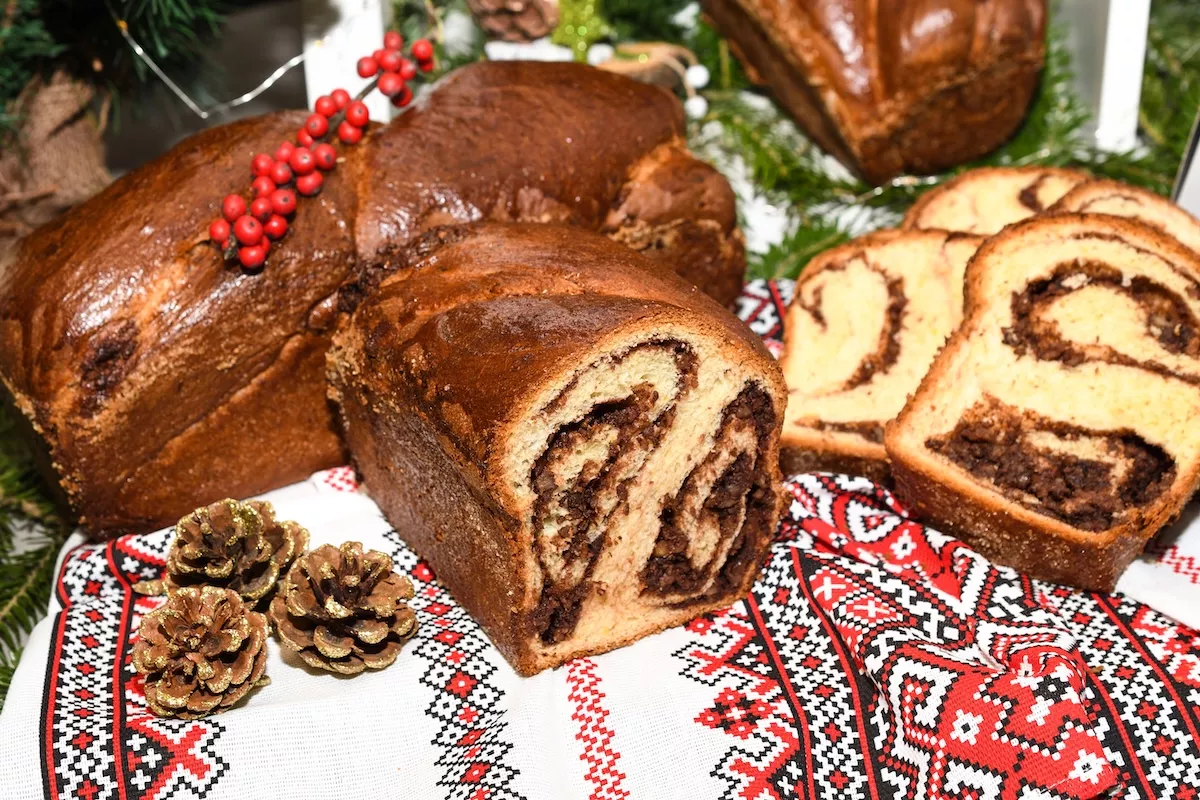
But the meal is not complete without Cozonac. A sweet bread that requires immense physical effort to knead, it is filled with swirls of walnut cream, cocoa, raisins, and Turkish delight. In Romanian households, the quality of a housewife is often jokingly (but seriously) judged by the fluffiness of her Cozonac.
A door left open
Perhaps the most defining characteristic of a Romanian Christmas is the open door. In the countryside, gates are rarely locked during the holidays. Neighbors drift between houses, tasting each other’s wine and comparing homemade sausages.
In a modern Europe that is increasingly individualistic, Romania’s winter holidays serve as a reminder of the power of community. Whether in a high-rise in Bucharest or a wooden cottage in the Carpathians, the message remains the same: come in, eat, drink, and let us weather the winter together.