






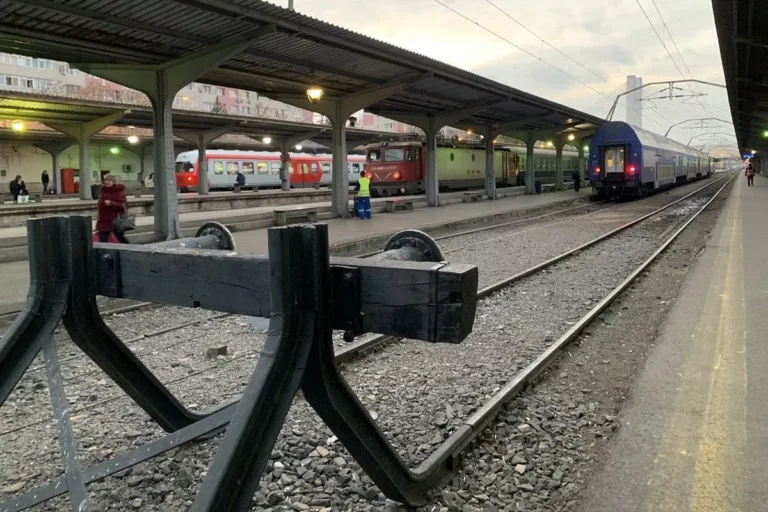
Romania’s rail transport sector recorded a significant contraction in the first nine months of 2025, with both passenger traffic and freight volumes declining year-on-year, according to data from the National Institute of Statistics (INS).
Between January and September 2025, 48.99 million passengers traveled by train, representing an 8.8% decrease compared to the same period in 2024. The decline was mirrored in passenger-kilometers, which fell by 9.8%.
Rail freight activity also weakened. Total freight volumes fell by 8.4% year-on-year, reaching 30.11 million tonnes. Domestic transport accounted for 79.3% of total volumes, underlining the sector’s dependence on internal economic activity. The only area of expansion was transit freight, which increased by 53.6%, reflecting Romania’s role as a transit corridor.
The composition of transported goods remained concentrated in bulk and energy-related commodities as coke and refined petroleum products accounted for 26% of total freight volumes, and coal, lignite, crude oil and natural gas represented 17.7%.

Operational indicators: efficiency gains offset by scale losses
INS data show a mixed operational picture. Some efficiency-related indicators improved compared to the same period in 2024:
- Average freight wagon turnaround time increased by 15.7%;
- Average commercial speed of freight trains rose by 1.7%;
- Average daily mileage of passenger wagons increased by 0.4%;
- Average static load of freight wagons rose by 0.4%.
However, these gains were outweighed by declining utilization and activity levels:
- Average daily mileage of freight wagons: -16.7%;
- Average daily mileage of freight locomotives: -16.6%;
- Loaded wagons entering from abroad: -10.8%;
- Loaded wagons on the CFR network: -6.1%;
- Average gross weight per freight train: -3.5%;
- Average commercial speed of passenger trains: -1.4%.