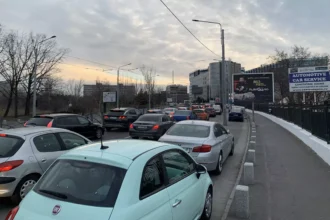




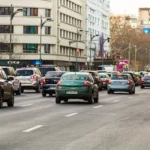

Traffic congestion is no longer just a transportation issue in Romania’s capital, it is increasingly influencing residential decisions, according to a new Cosmopolis survey showing that nearly eight in ten Bucharest residents would consider relocating to neighborhoods where essential services are within walking distance.
The survey, conducted among residents of Bucharest and Ilfov County, found that 70% of respondents are dissatisfied with the amount of time lost in traffic, while more than half spend over one hour every day commuting for essential activities such as work, school or shopping. Around one in five spends more than two hours on the road daily.
Congestion ranks as the city’s second-largest frustration, followed by pollution, the lack of green spaces and insufficient parking, highlighting how mobility challenges are increasingly shaping quality of life in Romania’s largest urban area.
Time is becoming a real estate asset
The findings suggest that buyers are increasingly prioritizing convenience over distance, with 78% saying they would consider moving to a neighborhood where daily amenities are located within a 10-minute walk.

Green spaces emerged as the most important feature when choosing a residential development, followed by nearby supermarkets, sports facilities and educational infrastructure.
The results reflect a broader shift toward integrated residential developments designed around the so-called “15-minute city” concept, where residents can access work, education, shopping and healthcare without relying heavily on private vehicles.
Commuting takes a toll on daily life
Beyond the economic cost of congestion, respondents highlighted its impact on personal well-being. Nearly half said they would use the time currently spent in traffic for rest and recovery, while others would prefer spending more time with family or engaging in sports and wellness activities.
Only a small minority would use the additional time to generate more income, suggesting that congestion is increasingly perceived as a quality-of-life issue rather than simply a productivity challenge.